
Caregiver Stress Tips: 10 Practical Ways to Reduce Stress and Protect Your Well-Being
Feeling stressed as a caregiver? You're not alone.
Caregiving is one of the most selfless and meaningful responsibilities a person can take on.
Whether you're caring for an aging parent, spouse, child, or loved one with chronic health needs, caregiving often comes with emotional, physical, and mental challenges.
Many caregivers spend so much time caring for others that they forget to care for themselves.
The result? Chronic stress, exhaustion, frustration, and eventually burnout.
The good news is that stress doesn't have to take over your life. Small, intentional changes can make a significant difference in how you feel and function each day.
If you're feeling overwhelmed, these caregiver stress tips can help you regain control, protect your health, and create a more sustainable caregiving routine.
Why Caregiver Stress Happens
Caregivers often juggle multiple responsibilities at once:
Managing medications
Coordinating appointments
Monitoring health changes
Handling finances
Providing emotional support
Managing household responsibilities
Over time, these responsibilities can create a constant state of stress.
You may feel like you're always "on duty" with little opportunity to rest or recharge.
Recognizing stress early is one of the best ways to prevent burnout.
1. Stop Trying to Do Everything Yourself
One of the most common causes of caregiver stress is believing that you must handle everything alone.
The truth is that caregiving was never meant to be a one-person job.
Ask for Help With:
Grocery shopping
Meal preparation
Transportation
Prescription pickups
Household chores
Even small forms of support can reduce your workload significantly.
Remember:
Accepting help is not a sign of weakness—it is a sign of wisdom.
2. Create a Daily Care Routine
Stress often increases when every day feels unpredictable.
A structured routine can bring calm and consistency to caregiving.
Consider creating routines for:
Morning
Medications
Meals
Hygiene
Exercise
Afternoon
Appointments
Rest periods
Hydration
Evening
Dinner
Medications
Relaxation
Bedtime preparation
When everyone knows what to expect, daily life becomes more manageable.
3. Stay Organized
Disorganization creates unnecessary stress.
Searching for medication lists, insurance cards, appointment details, or emergency contacts can quickly become overwhelming.
Keep all important information in one place:
Medical records
Medication lists
Appointment schedules
Emergency contacts
Insurance information
A simple organization system can save hours of frustration.
4. Schedule Breaks Before You Need Them
Many caregivers wait until they are completely exhausted before taking a break.
By then, stress levels are often already too high.
Instead, schedule breaks regularly.
Even 10–15 minutes can help.
Use that time to:
Take a walk
Read a book
Pray
Listen to music
Sit quietly with a cup of tea
Small breaks throughout the day can have a powerful impact on your stress levels.
5. Take Care of Your Physical Health
When caregivers become busy, self-care is often the first thing to disappear.
Unfortunately, neglecting your health only increases stress.
Focus on:
Sleep
Aim for consistent, quality sleep whenever possible.
Nutrition
Choose nourishing meals and stay hydrated.
Exercise
Even a short walk can improve mood and reduce stress.
Medical Care
Don't skip your own appointments.
Your health matters too.
6. Learn to Recognize Burnout Warning Signs
Caregiver stress can eventually lead to burnout.
Watch for signs such as:
Constant fatigue
Irritability
Anxiety
Forgetfulness
Loss of motivation
Feeling emotionally numb
The earlier you recognize these signs, the easier it is to make changes.
7. Connect With Other Caregivers
Caregiving can feel isolating.
Many caregivers feel that no one truly understands what they're experiencing.
Connecting with other caregivers can provide:
Encouragement
Practical advice
Emotional support
Validation
Whether through local groups, online communities, church groups, or support organizations, finding your people can make a tremendous difference.
8. Focus on What You Can Control
Caregivers often worry about things that are beyond their control:
Disease progression
Medical outcomes
Future uncertainties
While these concerns are understandable, constantly focusing on them can increase anxiety.
Instead, ask yourself:
What can I control today?
Perhaps it's:
Organizing medications
Preparing healthy meals
Making an appointment
Taking a break
Small actions build confidence and reduce feelings of helplessness.
9. Practice Self-Compassion
Many caregivers set impossibly high expectations for themselves.
You may feel guilty when:
You're tired
You make mistakes
You need help
You want time for yourself
But perfection is not required.
You're human.
Some days will be harder than others.
Give yourself the same kindness and grace that you offer to the person you're caring for.
10. Remember That You Matter Too
This may be the most important caregiver stress tip of all.
Your needs matter.
Your health matters.
Your peace of mind matters.
You cannot pour from an empty cup.
The better you care for yourself, the better equipped you'll be to care for your loved one.
Self-care is not selfish—it is part of responsible caregiving.
A Simple Daily Stress-Reduction Plan
If you're feeling overwhelmed, start with these five daily habits:
Drink enough water
Take one short break
Move your body for 10–20 minutes
Connect with someone supportive
Do one thing that brings you joy
You don't have to do everything perfectly.
Small, consistent steps lead to lasting change.
Final Thoughts
Caregiving is a journey filled with challenges, but it doesn't have to come at the expense of your own well-being.
By creating routines, staying organized, asking for help, and making self-care a priority, you can reduce stress and build a healthier, more sustainable caregiving experience.
Remember: caring for yourself is one of the most important things you can do for the person who depends on you.
You deserve support, rest, and encouragement too.
Feeling overwhelmed and unsure where to start?
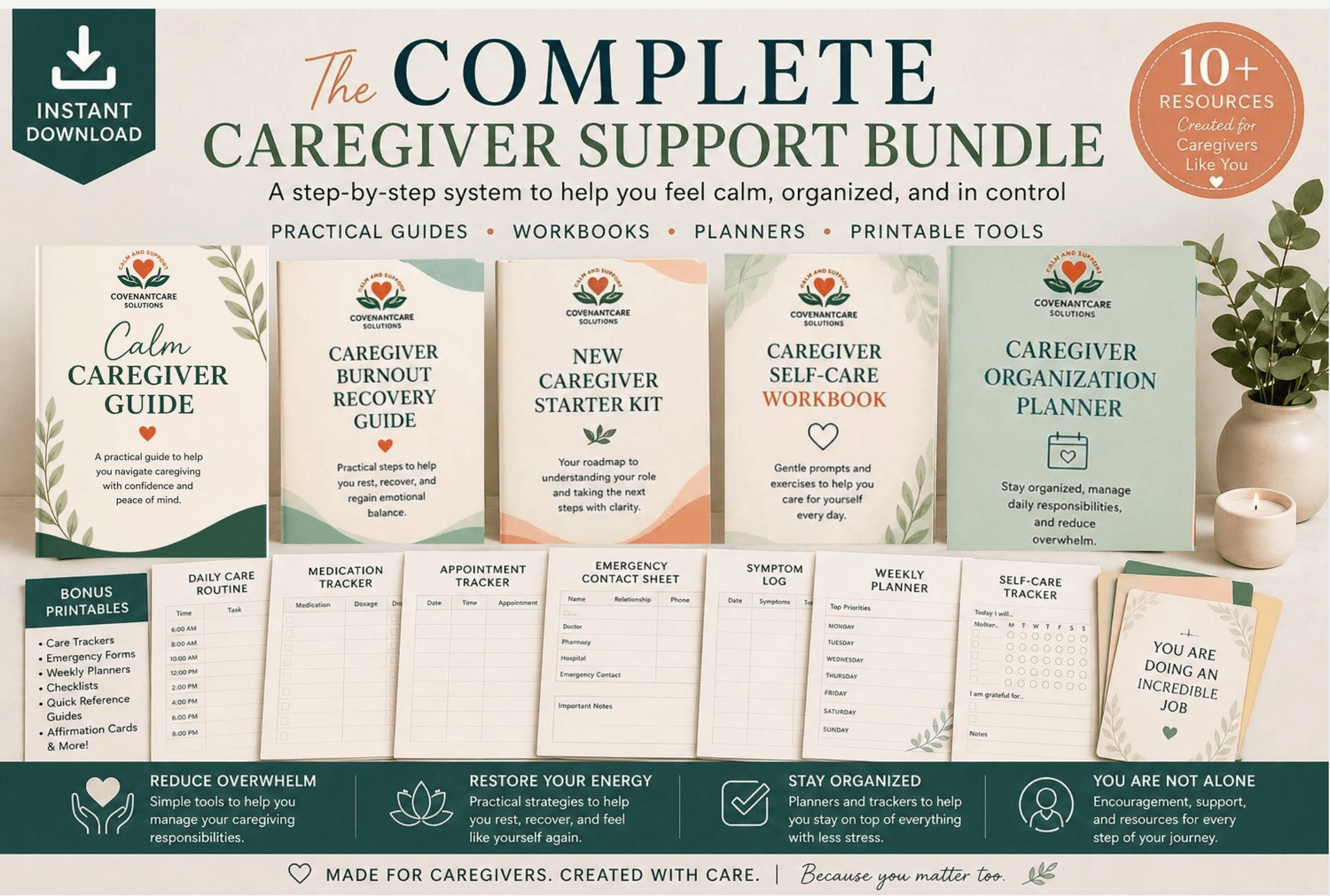
To help you get started, download The Complete Caregiver Support Bundle:
This step-by-step system will help you identify the most important areas to organize, reduce overwhelm, and create a smoother caregiving experience.
Get your copy today and take the first step toward calmer, more confident caregiving.
✨ Stay empowered, stay supported—CovenantCare Solutions has your back.
Read More Posts
Freebie Alert!!
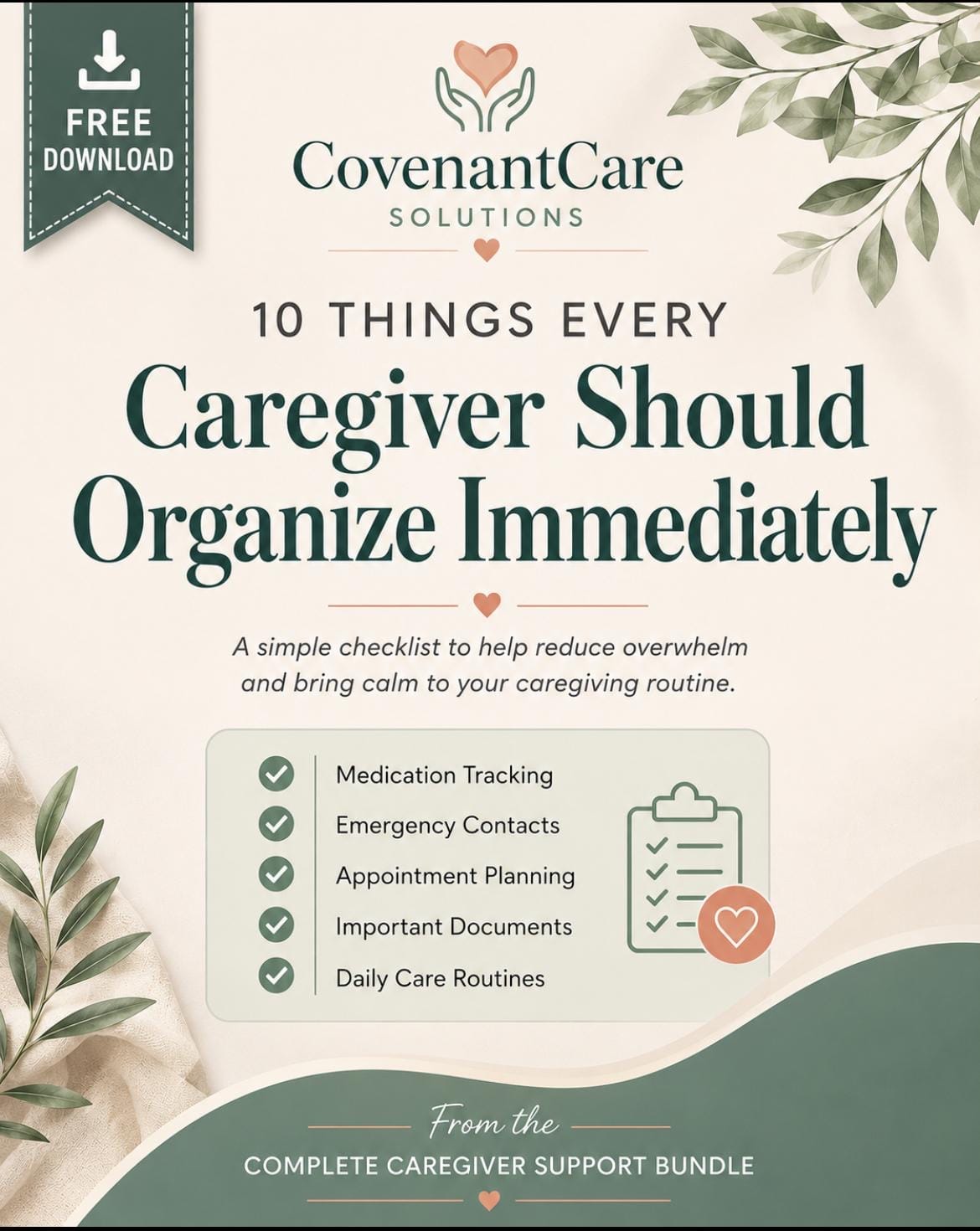
JOIN OUR FREE NEWSLETTER Today!
Get latest caregiver guides, curated resources to help you organize care, prevent burnout, and support your own well-being




©2026 CovenantCare Solutions™ , LLC