
How to Organize Care for Aging Parents: A Practical Guide for Family Caregivers
Feeling overwhelmed caring for an aging parent? You're not alone.
Many family caregivers find themselves suddenly responsible for managing medications, doctor's appointments, finances, emergency contacts, daily routines, and healthcare decisions—all while balancing work, family, and personal responsibilities.
Without a system, caregiving can quickly become stressful and exhausting.
The good news is that organization can reduce much of that overwhelm. When you have a clear plan in place, you spend less time scrambling and more time focusing on what matters most: caring for your loved one.
Here's a step-by-step guide to organizing care for aging parents.
Why Organization Matters in Caregiving
When important information is scattered across notebooks, calendars, text messages, and sticky notes, caregiving becomes harder than it needs to be.
A simple organization system can help you:
Reduce stress and confusion
Prepare for emergencies
Improve communication with healthcare providers
Stay on top of medications and appointments
Prevent important details from slipping through the cracks
Most importantly, organization helps you feel more confident and in control.
Step 1: Gather Important Medical Information
Start by creating one central location for all medical information.
Include:
Primary care physician
Specialists
Pharmacy information
Medical conditions
Allergies
Current medications
Insurance information
Emergency contacts
Having this information readily available can save valuable time during appointments or emergencies.
Caregiver Tip:
Keep both a printed copy and a digital copy.
Step 2: Create a Medication Management System
Medication management is one of the biggest challenges caregivers face.
Create a medication tracker that includes:
Medication Dosage Frequency Purpose
__________ ______ ______ ______
Review medications regularly and bring an updated list to every medical appointment.
Red Flags to Watch For:
Missed doses
Duplicate medications
Running out of prescriptions
Side effects
Step 3: Organize Appointments in One Place
Multiple appointments can become difficult to track.
Use:
A dedicated caregiver calendar
A digital calendar with reminders
An appointment tracker
Record:
Date
Time
Provider
Purpose of visit
Follow-up instructions
After each appointment, write down key recommendations while they are still fresh in your mind.
Step 4: Create a Daily Care Routine
Routines help reduce stress for both caregivers and aging parents.
A daily care routine may include:
Morning
Medications
Breakfast
Hygiene
Exercise or movement
Afternoon
Lunch
Hydration
Appointments
Rest period
Evening
Dinner
Medications
Relaxation
Bedtime preparation
Consistency often improves safety, comfort, and overall well-being.
Step 5: Organize Important Documents
Many caregivers struggle because critical documents are difficult to locate when needed.
Create a caregiver binder or digital folder that includes:
Medical Documents
Insurance cards
Medication lists
Medical history
Legal Documents
Insurance cards
Medication lists
Medical history
Financial Documents
Bills
Account information
Monthly expenses
Store documents in a secure but easily accessible location.
Step 6: Build an Emergency Information Sheet
If an emergency happens, you should be able to find important information immediately.
Include:
Full name
Date of birth
Medical conditions
Medications
Allergies
Emergency contacts
Physician information
Keep copies:
At home
In your caregiver binder
On your phone
Step 7: Create a Support Network
One of the biggest mistakes caregivers make is trying to do everything alone.
Make a list of people who can help:
Family members
Friends
Church members
Neighbors
Professional caregivers
Even small tasks can make a significant difference.
Examples:
Grocery shopping
Transportation
Meal preparation
Respite care
Remember: Asking for help is not weakness. It's good caregiving.
Step 8: Schedule Time for Yourself
Many caregivers spend so much time caring for others that they neglect their own needs.
Burnout often begins when caregivers:
Skip meals
Ignore health concerns
Stop exercising
Eliminate personal time
Self-care is not selfish.
You cannot provide quality care if you are exhausted, overwhelmed, or unwell.
Schedule time for:
Rest
Exercise
Prayer or reflection
Friends and family
Activities you enjoy
The Organization Mistake Most Caregivers Make
Many caregivers believe they need a perfect system before they start.
They don't.
Start simple.
Choose one area today:
Medications
Appointments
Documents
Daily routines
Small improvements create significant results over time.
The goal is progress, not perfection.
Final Thoughts
Caring for an aging parent can be one of life's most rewarding experiences, but it can also feel overwhelming without the right systems in place.
When you organize medications, appointments, documents, routines, and support resources, caregiving becomes more manageable and less stressful.
The best time to get organized is before a crisis happens.
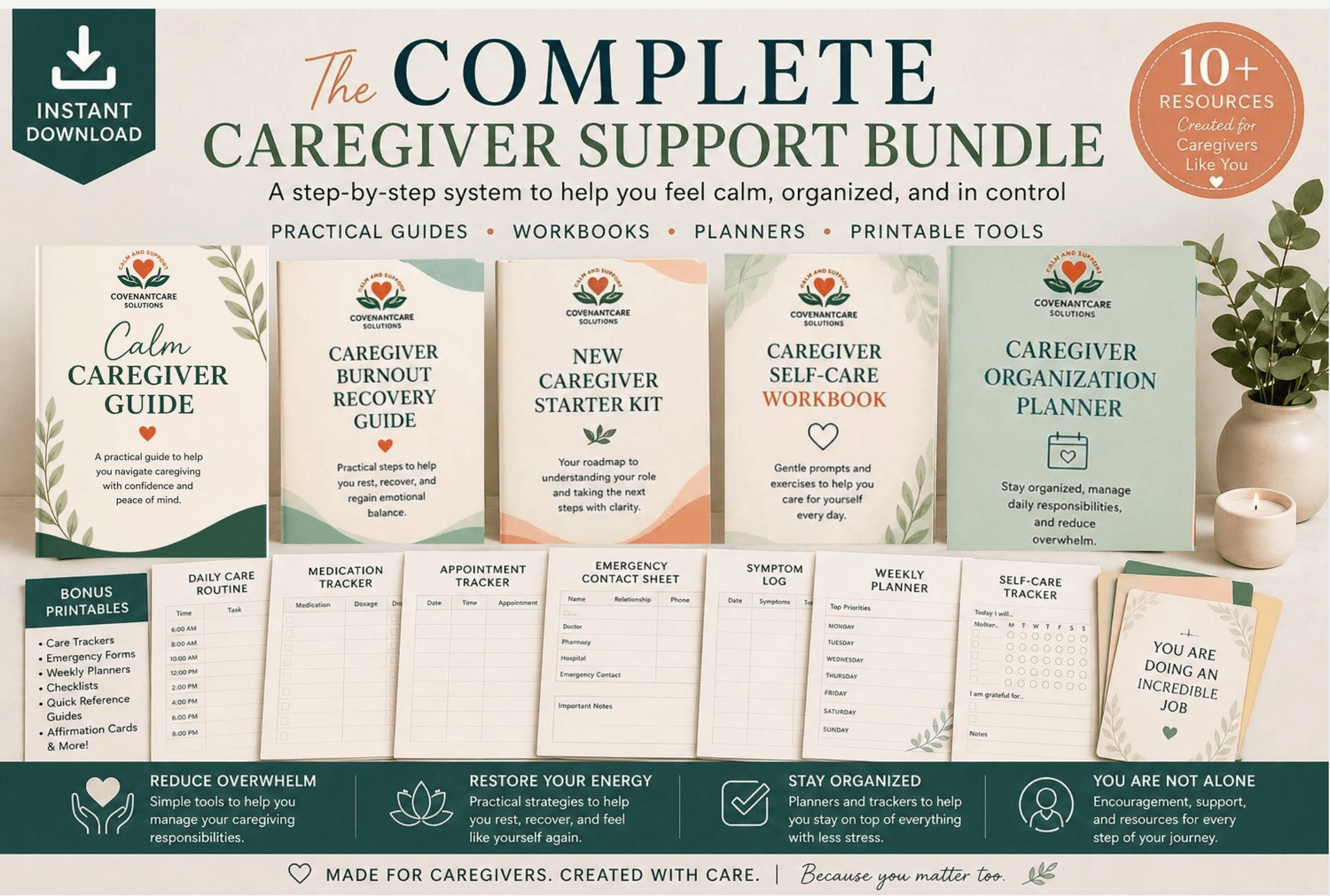
To help you get started, download The Complete Caregiver Support Bundle:
This step-by-step system will help you identify the most important areas to organize, reduce overwhelm, and create a smoother caregiving experience.
Get your copy today and take the first step toward calmer, more confident caregiving.
✨ Stay empowered, stay supported—CovenantCare Solutions has your back.
Read More Posts
Freebie Alert!!
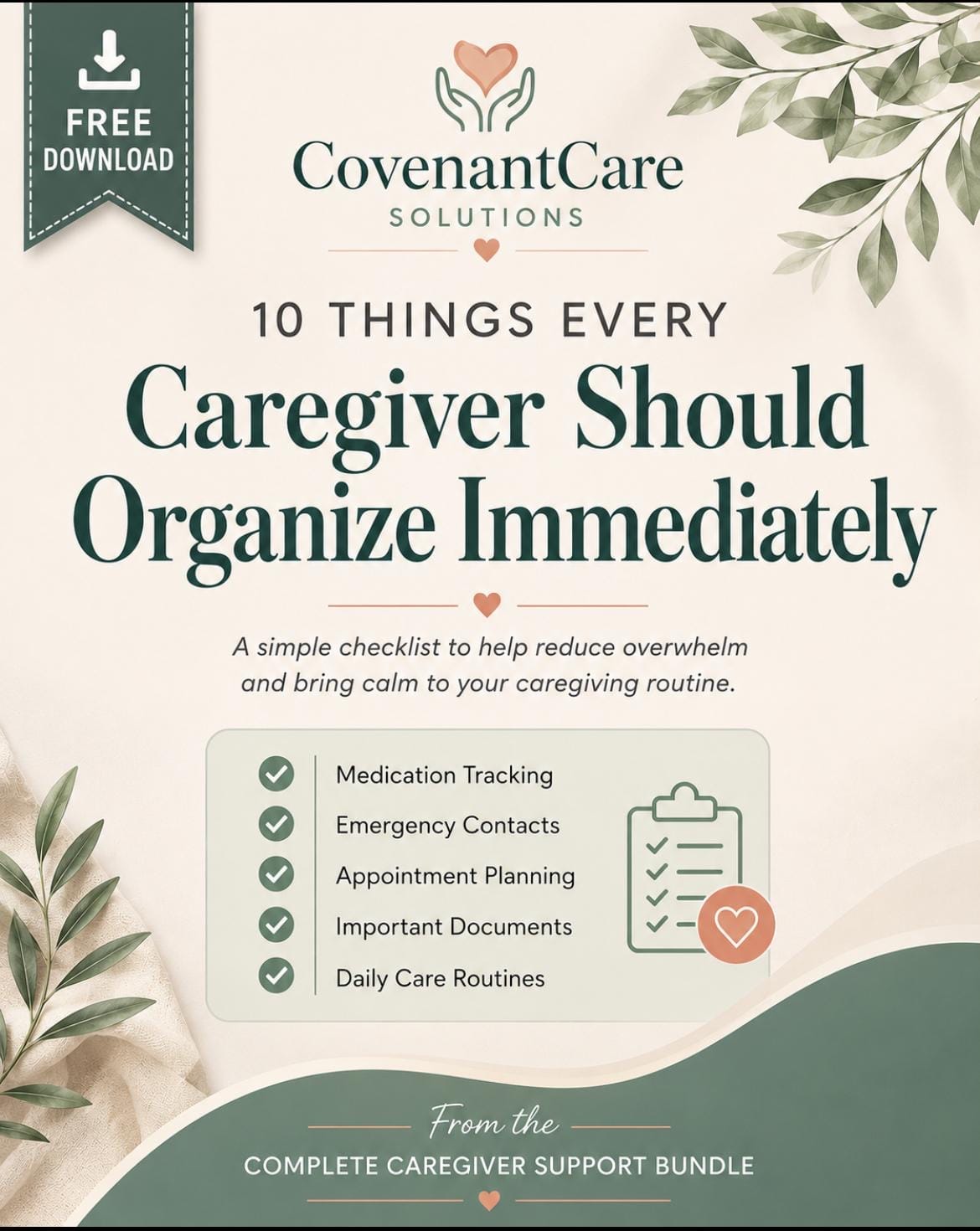
JOIN OUR FREE NEWSLETTER Today!
Get latest caregiver guides, curated resources to help you organize care, prevent burnout, and support your own well-being




©2026 CovenantCare Solutions™ , LLC